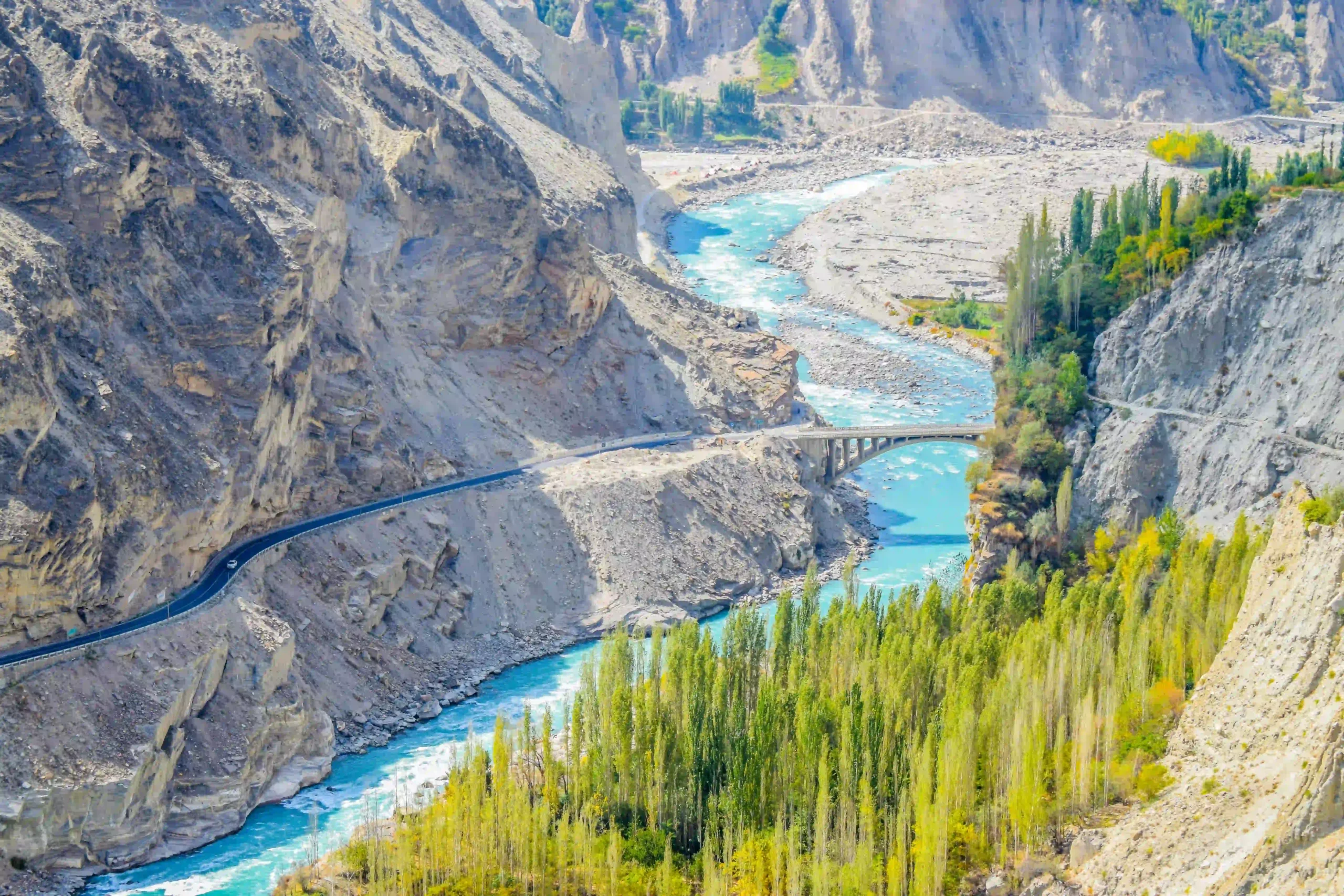
If autumn is the north’s golden season, spring is its fresh start. Between late March and early May, the valleys of Hunza and Baltistan fill with white and pink apricot, cherry and almond blossom. The terraced fields turn bright green, rivers run fast with snowmelt, and the mountains still wear a thick white coat. You get all of this with far fewer visitors than in summer, and with people who are happy to see guests after a long winter.
This 12-day tour starts and ends in Islamabad and covers the best of Skardu, Shigar, Khaplu and Hunza. I have written this version differently from my autumn plan, for two reasons. First, spring is a season of unstable weather, so I have added buffer time. Second, the current situation in the north needs careful planning, so I have designed the route around it. Instead of driving the long Besham to Chilas section of the Karakoram Highway, we fly into Skardu, which saves a full day and avoids the stretch that several foreign governments currently advise against. Please read the section below, The Current Situation: What You Should Know, before you book.
Best dates: late March to early May. Hunza’s blossom is usually at its peak from late March to mid April. Skardu and Shigar bloom a bit later, from mid to late April.
Group size: 2 to 12 guests (private departures possible) Difficulty: Easy to moderate. Short walks only. Max altitude: Khunjerab Pass, about 4,693 m (only if open, see notes)
Welcome to Pakistan! I meet you at the airport and take you to your hotel. After you rest, we visit Faisal Mosque and drive up to Daman-e-Koh in the Margalla Hills for a view over the city. Dinner is in the old village of Saidpur. Tonight we also go through the plan and the current road and weather updates together, and check your warm clothes.
Overnight: Islamabad (Dinner included)
About 1 hour flight
We take an early flight to Skardu. On a clear morning this flight is one of the best in the world, with Nanga Parbat rising out of the clouds. After landing, we rest and acclimatise, then visit Kharpocho Fort and Skardu’s old bazaar in the afternoon.
If the flight is cancelled: This happens often. We rebook for the next day, and use the time in Islamabad and Taxila. Day 5 becomes our catch-up day. We do not drive the Mansehra to Chilas highway unless official advisories allow it.
Overnight: Skardu (Breakfast and dinner included)
We visit Upper Kachura Lake first, when the water is clear and the air is still. Then we go to Lower Kachura Lake and Shangrila Resort. After lunch, we walk around the old town and drive to Sarfaranga Cold Desert for sunset. In spring the sand is cool and quiet, with snow peaks all around.
Overnight: Skardu (Breakfast and dinner included)
A day for culture. We drive to Shigar Valley and visit Shigar Fort (Fong-Khar), a 400-year-old palace with local wood carving, and take tea in its garden. Then we continue along the Shyok River to Khaplu, to see Chaqchan Mosque and Khaplu Palace. Blossom is just beginning in the orchards at this time of year. We return to Skardu in the evening.
Overnight: Skardu (Breakfast and dinner included)
This is our weather buffer. If everything is on schedule, we take a day trip to Basho Valley or Manthokha Waterfall, depending on road conditions. If Day 2 was delayed, this is our catch-up day. Please note: Deosai Plains is closed by snow in spring, and normally opens around June, so we do not plan it for this tour.
Overnight: Skardu (Breakfast and dinner included)
About 7 to 8 hours
We drive from Skardu along the Indus River toward Gilgit. The road is spectacular but can be affected by rockfall after rain, so we start early. We stop to see the Kargah Buddha, then continue along the Hunza River to Karimabad. Rakaposhi comes into view, and the first apricot blossoms of Hunza line the road.
Overnight: Karimabad, Hunza (Breakfast and dinner included)
A slow day in Hunza. In the morning we visit Baltit Fort and wander through the old bazaar. Then we see Altit Fort, the older fort, which sits above terraced fields in bloom. In the afternoon, we meet a local family for tea and try walnut cake and apricot products. At sunset we drive up to Eagle’s Nest for views of Rakaposhi, Ultar Sar and Golden Peak.
Overnight: Karimabad, Hunza (Breakfast and dinner included)
We drive up the valley to Attabad Lake, a deep turquoise lake formed by a landslide in 2010, with an optional boat ride. We continue to Gulmit and Passu, where you see the Passu Cones, Passu Glacier and the thrilling Hussaini Suspension Bridge. We spend the night in Passu or Sost.
Overnight: Passu or Sost (Breakfast and dinner included)
If the road is open and the weather is clear, we go up through Khunjerab National Park to the Pakistan side of the pass at 4,693 m. We may see ibex, yaks and Marco Polo sheep. It is cold and the air is thin, so we stay a short time. If the road is still closed by snow, we visit Borith Lake and Passu Glacier instead, which are lovely in spring. We return to Karimabad for the night.
Overnight: Karimabad, Hunza (Breakfast and dinner included)
About 2.5 to 3 hours
A relaxed morning, and one last breakfast with Rakaposhi. We drive to Gilgit, with a stop at the Gilgit suspension bridge and the old bazaar. The afternoon is free for rest and shopping. Gilgit is our flight hub, so we stay here the night before the return flight.
Overnight: Gilgit (Breakfast and dinner included)
About 1 hour flight
We take the morning flight to Islamabad. If the flight is cancelled by weather, we try again the next day, and the farewell day moves forward. In the afternoon, once back in Islamabad, we visit Taxila Museum and its Buddhist ruins, or the Lok Virsa heritage museum.
Overnight: Islamabad (Breakfast and dinner included)
A relaxed morning for last-minute shopping or the Saidpur village. I take you to the airport for your flight home. Please book your international flight for the afternoon or evening, not early morning. Mountain flights are delayed more often than you would think, and I never want you to miss your flight home.
Breakfast included